
Your Phone Goes Everywhere With You
Think about how many times you touch your smartphone in a single day.
You pick it up when you wake up. You take it to work. You use it on public transport, in cafés, at the airport, at the gym, while shopping, and sometimes even in the bathroom. Then you put it on a desk, a restaurant table, a car seat, or a kitchen counter before picking it up again.
Unlike many other objects we use throughout the day, smartphones rarely get the same cleaning attention as our hands.
And that creates an interesting hygiene problem.
Your phone is constantly moving between your hands and the environment around you. Every time you touch a shared surface and then reach for your phone, some of the microorganisms on your hands can potentially make their way onto the device. Later, when you pick up the phone again, the process can happen in reverse.
Researchers studying mobile phones have repeatedly found bacterial contamination on their surfaces. The exact microorganisms and level of contamination vary considerably depending on the environment and the person using the device, so dramatic claims that every phone is somehow “dirtier than a toilet” are not particularly useful. What the research does show is simpler: phones can act as surfaces that collect and transfer microorganisms.
That makes your phone worth thinking about as part of everyday hygiene.
The Hand–Phone–Hand Cycle
The problem is not that your smartphone is inherently dangerous.
The problem is how we use it.
Imagine a normal morning commute.
You open the door to your apartment building, press an elevator button, hold a handrail on the subway, use a payment terminal at a coffee shop, and then check a message on your phone.
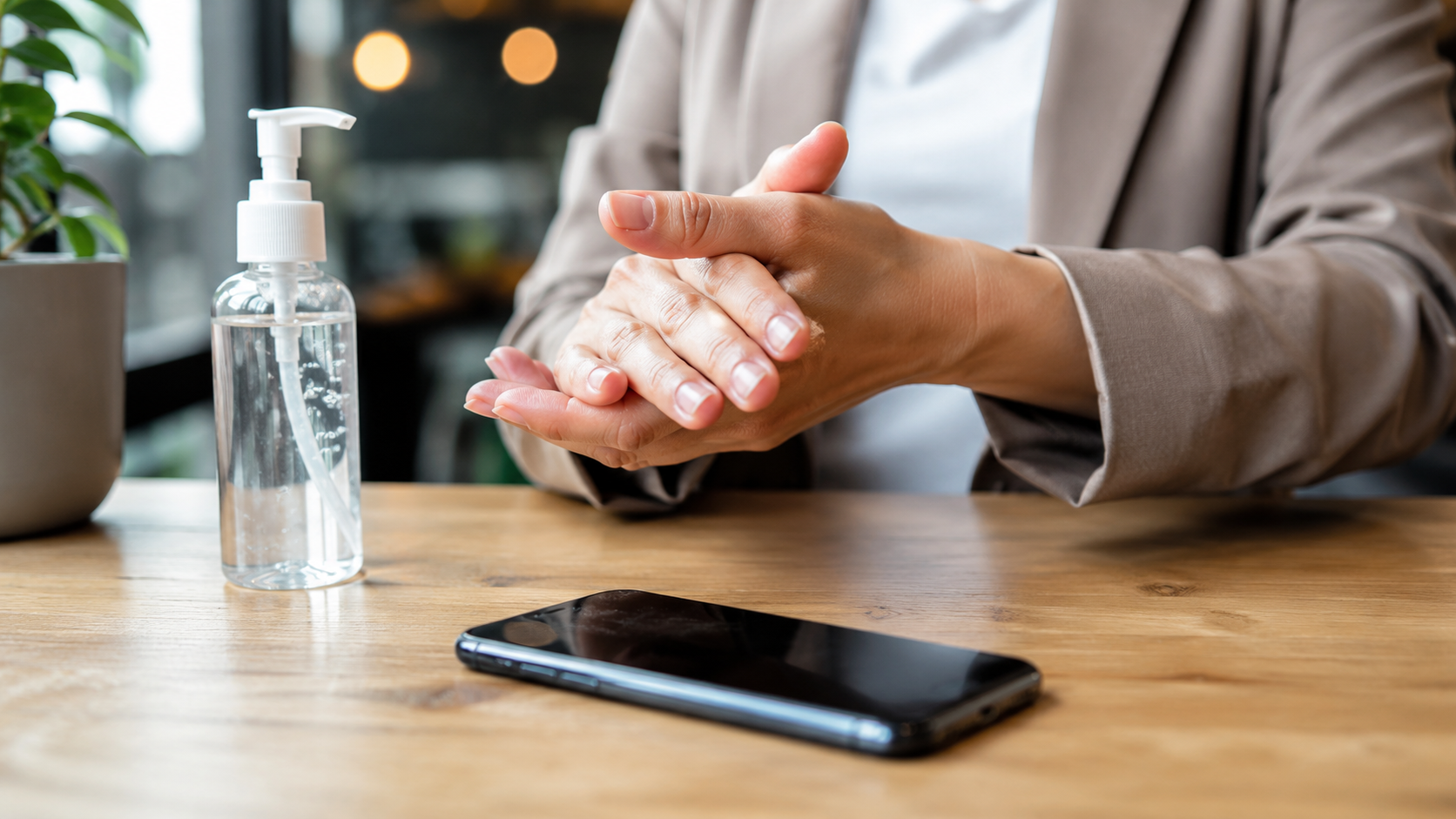
A few minutes later, you may wash or sanitize your hands.
Then you immediately pick up the same phone again.
This is where people often overlook an important part of hygiene. Cleaning your hands is helpful, but regularly handling an object that moves between different environments can reintroduce microorganisms to your hands.
Researchers have found bacteria both on people’s hands and on their mobile phones, supporting the idea that phones can participate in this cycle of cross-contamination.
It does not mean that touching your phone will automatically make you sick. Exposure does not equal infection. But it does demonstrate why hand hygiene works best as a routine rather than a one-time action.
Why Smartphones Collect So Much
Smartphones have several characteristics that make them particularly good at collecting whatever happens to be on our hands.
First, we touch them constantly.
Second, we carry them into many different environments.
Third, phones spend a lot of time close to our face.
And finally, many people clean their phones far less frequently than objects such as kitchen counters, bathroom surfaces, or even computer desks.
The result is a device that continuously travels between different environments while receiving plenty of direct contact from our hands.
Research in both community and healthcare settings has identified a wide range of microorganisms on mobile phones. Studies involving healthcare workers have even detected antibiotic-resistant bacteria, although hospital environments obviously involve different exposure levels than normal everyday life.
The practical lesson is not to become afraid of your phone.
It is simply to include it in your hygiene routine.
Think About Where You Put Your Phone
Many of us are careful about where we put food but surprisingly relaxed about where we put our phones.
Consider a typical day.
Your smartphone might spend time on:
- Restaurant tables
- Office desks
- Gym equipment
- Airport seats
- Public charging stations
- Car consoles
- Checkout counters
- Kitchen surfaces
- Bathroom shelves
- Hotel furniture
Then, five minutes later, the same phone might be next to your face while you’re making a call.
This constant movement is one reason smartphones deserve more attention when we think about personal hygiene.
A cleaner routine does not require disinfecting your phone every ten minutes. That would be excessive, impractical, and potentially bad for the device.
Instead, it means being more aware of when your hands and your phone have been exposed to particularly busy or dirty environments.
Hand Hygiene Is Still the Most Practical First Step
You cannot control every surface you touch throughout the day.
You can control what you do afterward.
According to the CDC, washing hands with soap and water is the best option for removing germs in most situations. When soap and water are not available, an alcohol-based hand sanitizer containing at least 60% alcohol can be used to clean the hands.
This is especially practical after situations such as:
- Using public transportation
- Shopping
- Handling shared equipment
- Visiting crowded public places
- Using shared office spaces
- Touching public doors or elevators
- Traveling through airports or train stations
The goal is not to sanitize your hands every thirty seconds.
It is to recognize the moments when hand cleaning makes sense.
When Should You Choose Soap and Water?
Hand sanitizer is useful because it is quick, portable, and does not require access to a sink.
But it is not a complete replacement for handwashing.
Soap and water should generally be your first choice when your hands are visibly dirty or greasy. The CDC also notes that hand sanitizer does not eliminate every type of germ and may be less effective under certain conditions.
A simple rule works well:
If your hands are visibly dirty, wash them.
If you need to clean your hands and do not have access to soap and water, an appropriate hand sanitizer can be a convenient alternative.
That distinction matters because good hygiene is not about using the same product for every situation. It is about choosing the right method at the right time.
Don’t Forget to Clean the Phone Itself
Cleaning your hands while never cleaning your phone only addresses half of the routine.
Smartphones should also be cleaned periodically, particularly after heavy use in public environments.
The important part is to follow the cleaning recommendations for your specific device rather than spraying whatever cleaning product happens to be nearby directly onto the screen.
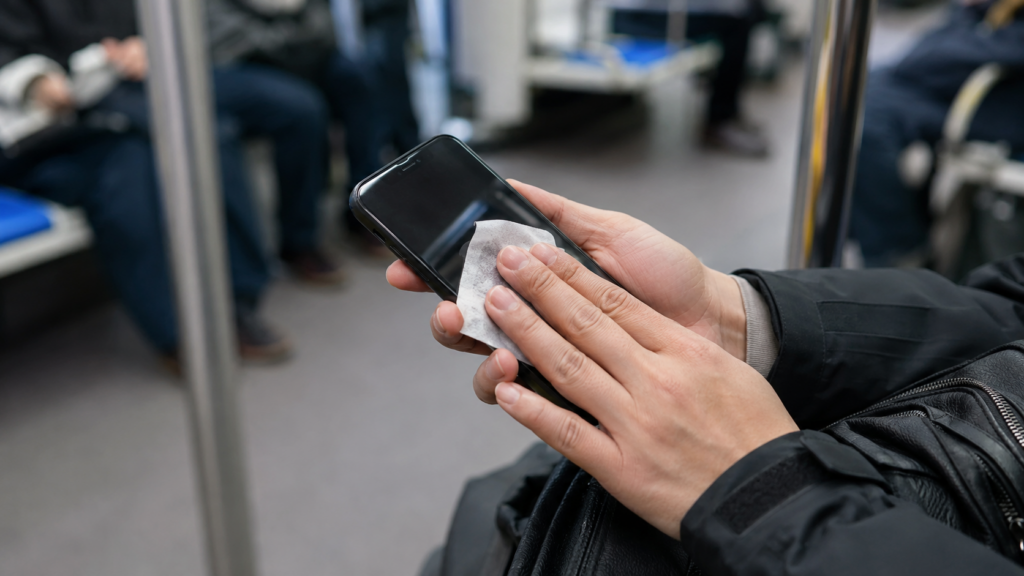
For example, Apple currently states that certain disinfecting wipes, including 70% isopropyl alcohol wipes and 75% ethyl alcohol wipes, can be gently used on exterior iPhone surfaces. Apple also warns against getting moisture into openings or submerging the device in cleaning products.
Samsung similarly recommends turning the device off, disconnecting cables, and using a soft microfiber cloth. For supported Galaxy devices, Samsung says a cloth dampened with an appropriate alcohol-based disinfectant may be used on certain exterior surfaces while avoiding excessive moisture and openings.
The exact cleaning instructions can vary by device, material, screen coating, case, and manufacturer.
So check the manufacturer’s recommendations before disinfecting your phone.
Hand Sanitizer Is for Your Hands
There is another distinction worth making.
A hand sanitizer and a surface disinfectant are not automatically interchangeable.
A product formulated for your skin should be used according to its label. You should not assume that pouring hand sanitizer onto your smartphone is the correct way to disinfect the device.
Apart from potentially damaging the phone, the manufacturer may recommend a completely different cleaning method.
Use hand sanitizer for your hands.
Clean your device according to the device manufacturer’s instructions.
It sounds obvious when written down, but human beings have managed to turn “spray random liquid onto expensive electronics” into a surprisingly persistent cleaning technique.
Your Smartphone and Food
One situation deserves particular attention: eating.
People often check their phones while waiting for food, while eating lunch, or even while preparing a meal.
That means a phone that has spent the morning traveling through public environments can suddenly appear right next to food.
A useful habit is simple:
Clean your hands before eating, and try not to repeatedly handle your phone during the meal.
If you do use your phone, particularly after it has been handled in public environments, consider cleaning your hands again before touching food.
The CDC recommends handwashing before eating and during food preparation.
Small changes like this are much easier to maintain than trying to create a perfectly sterile environment around yourself.
Smartphones at Work
Phones can also move microorganisms between personal and professional spaces.
You arrive at the office, put your phone on the desk, use a shared coffee machine, open meeting-room doors, touch a printer, pick up your phone, use someone else’s keyboard, and then answer another message.
In workplaces where many people share equipment and spaces, hand hygiene becomes particularly useful.
For most offices, this does not require complicated infection-control procedures.
Basic habits go a long way:
- Keep your hands clean
- Clean your phone periodically
- Avoid placing your phone on obviously dirty surfaces
- Avoid touching your face unnecessarily
- Wash your hands before eating
- Keep hand sanitizer accessible when a sink is not nearby
Simple routines are usually the ones people actually continue using.
Your Phone While Traveling
Travel makes the hand-phone cycle even more noticeable.
Airports, trains, buses, taxis, hotels, and restaurants involve constant interaction with shared surfaces. At the same time, travelers depend heavily on smartphones for boarding passes, navigation, payments, translation, tickets, and communication.
So the phone gets handled after almost every stage of the journey.
Keeping a small hand sanitizer in a backpack, handbag, car, or carry-on can make hand hygiene easier when soap and water are not immediately available.
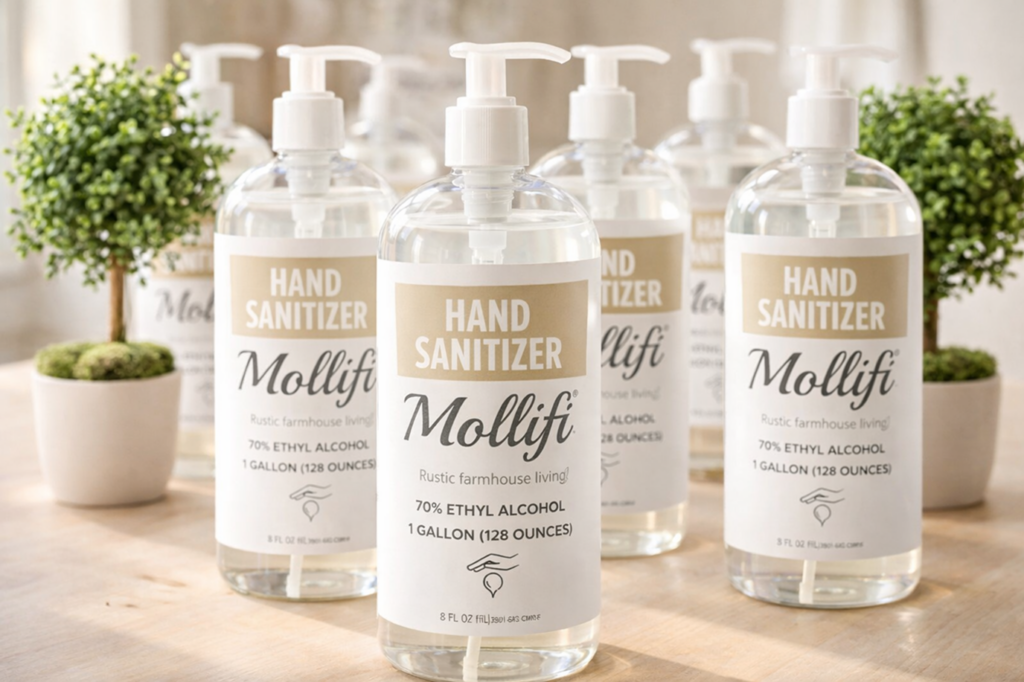
This is exactly where products such as Mollifii Sanitizers fit naturally into a daily routine.
They are not about creating a sterile bubble around yourself. That is neither realistic nor necessary.
They are about making hand hygiene more convenient when life puts you somewhere without a sink.
Where Mollifii Fits Into Your Daily Routine
The easiest hygiene habits are the ones that require almost no extra effort.
A sanitizer that stays in your bag, vehicle, desk, or travel kit is available when you actually need it.
Mollifii Sanitizers are designed to support this kind of everyday routine: after public transport, while traveling, after shopping, at work, or during other situations when washing your hands immediately is not practical.
Use the product according to its label and remember that hand sanitizing should complement regular handwashing rather than replace it entirely.
The objective is straightforward: cleaner hands at the moments when it matters.
A Simple Smartphone Hygiene Routine
You do not need an elaborate cleaning schedule.
Try something more realistic:
- Wash your hands regularly with soap and water.
- When soap and water are unavailable, use an appropriate hand sanitizer according to its label.
- Clean your smartphone periodically following the manufacturer’s instructions.
- Pay extra attention after using public transportation, gyms, airports, stores, or other heavily shared spaces.
- Avoid placing your phone on obviously dirty surfaces.
- Clean your hands before eating or preparing food.
- Remember that cleaning your hands and cleaning your phone are two separate parts of the same hygiene routine.
These small habits take very little time, but they help interrupt the constant movement of microorganisms between your hands, your phone, and your surroundings.
Final Thoughts
Your smartphone is probably one of the most frequently touched objects you own.
That alone makes it worth including in your everyday hygiene habits.
There is no reason to become obsessed with making your phone perfectly germ-free. Our environment is full of microorganisms, and most of them are not a threat.
The smarter approach is simply to reduce unnecessary transfer.
Wash your hands when you can. Use hand sanitizer when soap and water are not available. Clean your phone appropriately. Pay attention to what you touch before eating or touching your face.
Your phone will continue to follow you everywhere.
Your hygiene routine probably should too.
Mollifii Sanitizers make that routine easier to carry with you, helping you keep clean hands within reach throughout the day.