
Hantavirus is one of those words that tends to sound alarming the moment it appears in the news. Unlike seasonal colds or flu, it is not something most people encounter regularly. Still, hantavirus infections can be serious, which makes it worth understanding how the virus spreads and what practical steps actually reduce the risk.
The most important thing to know is that hantavirus prevention is not mainly about avoiding crowds or constantly sanitizing every object around you. Most infections are connected to rodents and the materials they leave behind, including urine, droppings, saliva, and nesting material.
Good hand hygiene matters, but it is only one part of a broader prevention routine.
What Is Hantavirus?
Hantaviruses are a group of viruses carried primarily by rodents. Different types of hantaviruses are found in different parts of the world and may cause different forms of illness.
In North, Central, and South America, certain hantaviruses can cause hantavirus pulmonary or cardiopulmonary syndrome. This is a serious condition that primarily affects the lungs and cardiovascular system.
In Europe and Asia, hantaviruses are more commonly associated with hemorrhagic fever with renal syndrome, which can affect the kidneys and blood vessels.
Most people will never develop a hantavirus infection. However, when infection does occur, the illness may progress quickly and require urgent medical care. There is currently no specific treatment that cures hantavirus infection, so prevention and early medical attention remain especially important.
How Do People Become Infected?
Hantavirus is mainly spread from infected rodents to humans.
Rodents can release the virus through their urine, droppings, and saliva. When these materials dry, small contaminated particles may become mixed with dust. Sweeping, vacuuming, or disturbing the area can send those particles into the air, where they may be inhaled.
This means a person may be at risk while cleaning:
• A garage that has been closed for months
• A basement with signs of mice
• A shed, barn, or storage building
• A cabin that has been empty during winter
• A vehicle where rodents have built a nest
• Boxes or stored items contaminated by rodent waste
Infection may also occur if contaminated material reaches the eyes, nose, mouth, or damaged skin. Rodent bites and contaminated food are less common but possible routes of exposure.
For most hantaviruses, ordinary person-to-person transmission is not considered the main risk. Andes virus, found primarily in parts of South America, is an important exception. Limited transmission between people has been documented, usually after close and prolonged contact.
Why Everyday Hygiene Still Matters
Because hantavirus is strongly connected to rodent exposure, hand hygiene alone cannot provide complete protection. Still, clean hands help reduce the chance that contaminated material will be transferred from a surface to the face, food, personal belongings, or other people.
Think about what happens during a typical cleanup. You may move boxes, open doors, handle tools, touch garbage bags, adjust your clothing, or reach for your phone. Without thinking, you may then touch your nose, eyes, or mouth.
Good hygiene creates a useful barrier between contact with a potentially contaminated environment and the rest of your daily routine.
The most reliable option after cleaning is to wash your hands thoroughly with soap and warm water. When soap and water are not available, a waterless alcohol-based hand sanitizer may support routine hand hygiene, provided the hands are not visibly dirty or covered with organic material.
Where Hand Sanitizer Fits Into Hantavirus Prevention
Hand sanitizer is useful, but its role should be described accurately.
It can help clean hands after ordinary contact with shared objects, tools, door handles, storage containers, and other surfaces. It can also be useful while camping, working outdoors, traveling, or visiting places where immediate access to a sink is limited.
However, hand sanitizer should not be treated as the primary method of preventing hantavirus infection.
It does not replace:
• Rubber or plastic gloves
• Proper ventilation
• Safe removal of rodent waste
• An appropriate surface disinfectant
• Sealing holes and controlling rodents
• Washing visibly dirty hands with soap and water
Sanitizer should never be poured or sprayed directly onto rodent droppings as a substitute for a proper household disinfectant. Products intended for skin and products designed for disinfecting contaminated surfaces have different purposes.
A sanitizer is part of personal hygiene. A surface disinfectant is part of environmental cleaning. Mixing up those roles creates unnecessary risk.
How to Clean Rodent Droppings Safely
One of the biggest mistakes people make is reaching for a broom or vacuum cleaner as soon as they see droppings.
That may feel like the fastest solution, but it can disturb contaminated dust and send tiny particles into the air. Dry sweeping and vacuuming should be avoided until the affected material has been properly soaked and disinfected.
A safer process includes the following steps:
1. Ventilate the space
If you are entering a closed cabin, garage, shed, basement, or other enclosed area, open the doors and windows and allow fresh air to circulate before cleaning. Leave the area while it ventilates.
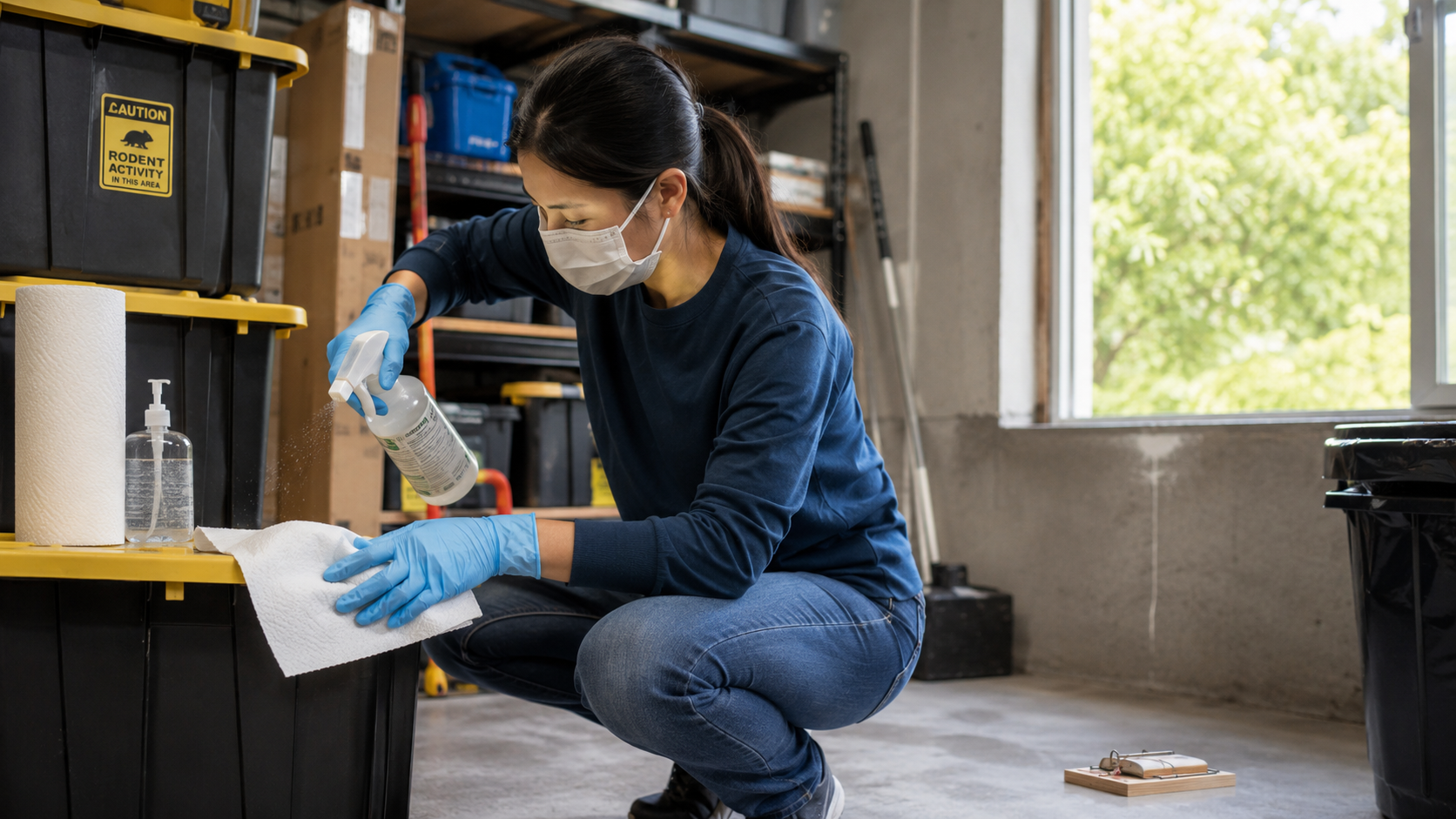
2. Put on protective gloves
Wear rubber or plastic gloves before touching contaminated objects, droppings, nesting materials, traps, or dead rodents.
3. Wet the contaminated material
Spray the droppings, urine, nest, or surrounding surface with an appropriate household disinfectant or a correctly prepared bleach solution. The area should be thoroughly wet rather than lightly misted.
4. Allow the disinfectant to work
Follow the contact time stated on the product label. CDC guidance commonly recommends allowing the wet disinfectant to remain on the material for at least five minutes, unless the product instructions specify a different time.
5. Wipe up the material
Use paper towels or disposable materials to remove the wet waste. Place everything into a covered garbage container. Dead rodents and nesting materials may require double-bagging before disposal.
6. Clean the surrounding surfaces
After removing the visible waste, mop or wipe nearby floors, shelves, counters, drawers, and other hard surfaces with disinfectant.
7. Remove gloves carefully
Wash the outside of the gloves before removing them. After removing the gloves, wash your bare hands thoroughly with soap and warm water.
When soap and water are temporarily unavailable and the hands are not visibly soiled, an alcohol-based hand rub may be used until proper handwashing is possible.
Common Hygiene Mistakes
Hantavirus prevention is less about complicated medical equipment and more about avoiding a few dangerous shortcuts.
Sweeping dry droppings
This can send potentially contaminated particles into the air. Wet and disinfect the material first.
Using a regular vacuum cleaner
Vacuuming untreated rodent waste may spread contaminated dust through the room and the vacuum exhaust.
Cleaning without gloves
Bare-hand contact increases the possibility of transferring contaminated material to the face, phone, food, or personal items.
Touching your face during cleanup
People often adjust glasses, scratch their nose, or touch their mouth without noticing. Try to keep your hands away from your face until the cleanup is finished and your hands have been washed.
Using hand sanitizer instead of surface disinfectant
A skin sanitizer is not automatically suitable for disinfecting floors, droppings, nests, or contaminated household materials. Always use a product labeled for the surface and purpose involved.
Ignoring the source of the problem
Cleaning the droppings without sealing entry points means the rodents may return. Prevention requires removing food sources, closing holes and gaps, and controlling the infestation.
Reducing Rodent Activity Around Your Home
The most effective prevention strategy is to reduce contact with rodents in the first place.
Inspect the exterior of your home, garage, basement, and storage areas for openings. Mice can enter through surprisingly small gaps, so damaged vents, spaces around pipes, gaps beneath doors, and cracks in walls should be repaired.
Food should be stored in sealed containers. Pet food, birdseed, and garbage can also attract rodents and should not be left accessible overnight.
Remove unnecessary clutter from garages, sheds, and basements. Cardboard boxes, paper, fabric, and rarely moved objects can provide nesting material and hiding places.
If you notice repeated signs of rodents, a large amount of waste, nests inside ventilation systems, or contamination throughout an entire building, professional pest-control and cleanup services may be safer than handling the situation yourself.
Outdoor Activities and Hantavirus Awareness
Hantavirus prevention also matters outside the home.
Campers, hikers, agricultural workers, forestry workers, and people staying in seasonal cabins may encounter rodent-contaminated environments. Before sleeping in a cabin or shelter, check for droppings, nests, gnawed packaging, and other signs of rodent activity.
Keep food sealed and avoid leaving open food inside tents, vehicles, or sleeping areas. Do not handle wild rodents, even if they appear dead.
Carry gloves, appropriate cleaning supplies, soap, clean water, and hand sanitizer. Mollifii Sanitizers can be kept in a backpack, vehicle, garage, or travel bag to support everyday hand hygiene when a sink is not immediately available.
Use every product according to its label. A sanitizer can help maintain cleaner hands during daily activities, but it should be used alongside proper cleaning procedures rather than as a replacement for them.
When Symptoms Require Medical Attention
The early symptoms of hantavirus infection may resemble flu or another common viral illness. They can include fever, headache, muscle aches, fatigue, nausea, vomiting, or abdominal discomfort.
Depending on the type of hantavirus, the illness may later progress to breathing difficulties, coughing, low blood pressure, bleeding problems, or impaired kidney function.
Anyone who develops these symptoms after possible contact with rodents, rodent waste, or a heavily contaminated building should seek medical attention promptly. It is important to tell the healthcare provider about the possible rodent exposure, even if it occurred several weeks earlier.
That detail can help doctors decide whether hantavirus testing should be considered.

What Really Helps?
Hantavirus prevention does not depend on a single product or habit.
What really helps is a combination of practical measures:
• Keeping rodents out of homes and workplaces
• Storing food securely
• Ventilating closed spaces before cleaning
• Never sweeping or vacuuming dry rodent waste
• Using gloves and an appropriate surface disinfectant
• Washing hands thoroughly after cleanup
• Using hand sanitizer when soap and water are unavailable
• Avoiding contact between dirty hands and the face
• Seeking medical care after symptoms and possible rodent exposure
Everyday hygiene is important because it supports these larger protective steps. It reduces careless transfer from contaminated objects to the hands, face, food, and personal belongings.
Mollifii Sanitizers can be a convenient part of that routine. Keep a bottle available for travel, outdoor work, garages, vehicles, and other situations where immediate handwashing may not be possible. Just remember that responsible protection begins with understanding the actual risk and using the right method for each task.
Final Thoughts
Hantavirus is serious, but fear is not a useful prevention strategy. Clear information is.
The main risk comes from exposure to infected rodents and their waste, especially when contaminated material is disturbed in an enclosed space. Safe cleaning, rodent control, ventilation, protective gloves, surface disinfection, and proper handwashing offer far more protection than simply spraying sanitizer after the fact.
Hand sanitizer still has a valuable role. It helps support cleaner hands during ordinary activities and provides a practical option when soap and water are not immediately available.
The best approach is simple: control the source, clean safely, protect your hands, and use each hygiene product for the job it was designed to do.
Sources Used for Fact-Checking
World Health Organization:
https://www.who.int/news-room/fact-sheets/detail/hantavirus
Centers for Disease Control and Prevention:
https://www.cdc.gov/hantavirus/about/index.html
https://www.cdc.gov/hantavirus/prevention/index.html
https://www.cdc.gov/healthy-pets/rodent-control/clean-up.html