A shared workspace can make a normal workday feel more connected. It also means that dozens of small touchpoints pass from one person to another: a meeting-room door handle, a coffee-machine button, a printer screen, a desk chair, a stylus, or a charging cable.
None of those moments needs to be alarming. They are simply part of how people work together.
The useful question is not how to make an office perfectly sterile. It is how to build a practical hand-hygiene routine that fits naturally between emails, meetings, breaks, and commutes.
When the routine is simple, it is much easier to keep.
Where Contact Points Add Up
Think about the first hour of a typical day at work. You may tap into the building, greet a colleague, press an elevator button, hold a handrail, use a shared coffee machine, open your laptop, and join a meeting.
Each action is small. Together, they create a steady hand–surface–hand cycle.
Shared desks and hot-desking areas add another layer. A workspace may look tidy, while the keyboard, mouse, conference remote, or desk lamp has been used by several people throughout the week. The point is not to worry about every object. It is to notice which moments naturally call for clean hands.
That awareness is especially helpful before eating, after commuting, after using communal equipment, and when moving from public areas back to a personal desk.
The Goal Is a Better Routine, Not a Perfect Workspace
Good hygiene works best when it is realistic. A busy employee is unlikely to follow a complicated checklist every hour, but most people can make a few well-timed choices during the day.
Washing hands with soap and water is a strong option whenever a sink is available, particularly when hands are visibly soiled. When that is not practical, hand sanitizer can be a convenient way to clean hands between everyday activities.
The value of a routine is consistency. Instead of reacting to every surface, choose a few repeatable moments that make sense for your workday.
Four Moments That Make a Difference
One useful moment is after the commute. Whether you drove, took public transport, cycled, or walked through a busy entrance, taking a few seconds to clean your hands before settling in creates a clear start to the day.
A second moment is after using shared equipment. This might be the printer, a meeting-room controller, a headset, a tablet, or a common keyboard. You do not need to stop work after every touch; simply build the habit around transitions, such as when you return to your own desk.
A third moment is before food or drinks. Lunch, coffee breaks, and snacks are natural reminders because hands are about to be close to your face.
The fourth is after a meeting or visitor interaction. Handshakes, shared markers, presentation clickers, and conference tables are all ordinary parts of collaboration. A quick hand-hygiene reset can make the transition back to focused work feel more intentional.
Make Hand Sanitizer Easy to Reach
The best hygiene product is the one people can actually use at the right moment. If sanitizer is stored in a cabinet across the room, it is easy to forget. If it is near the entrance, at the reception desk, beside shared equipment, or in a work bag, it becomes part of the environment.
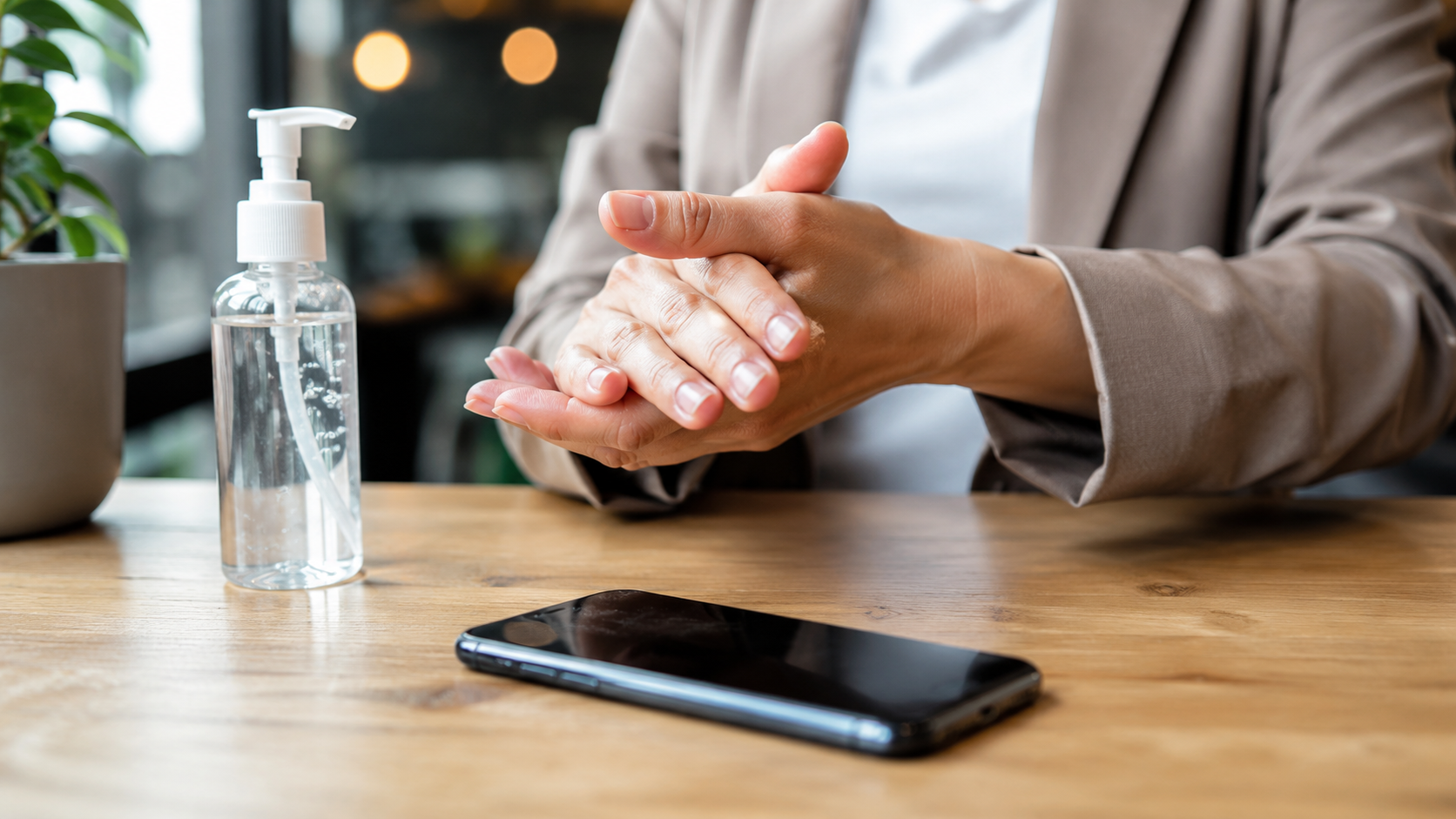
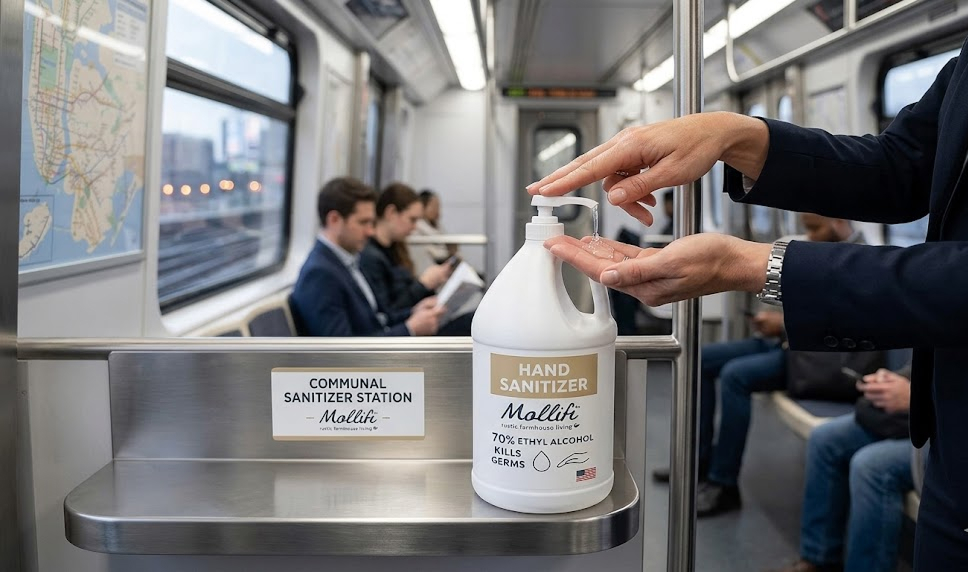
For a personal workspace, a small bottle placed beside a laptop stand, notebook, or water bottle can act as a quiet visual cue. For teams, a clearly visible dispenser near a shared touchpoint gives everyone an easy option without making the space feel clinical.
Convenience matters because habits are shaped by what happens in the moment. A simple, accessible option removes one more reason to skip the step.
Keep Your Personal Work Zone Simple
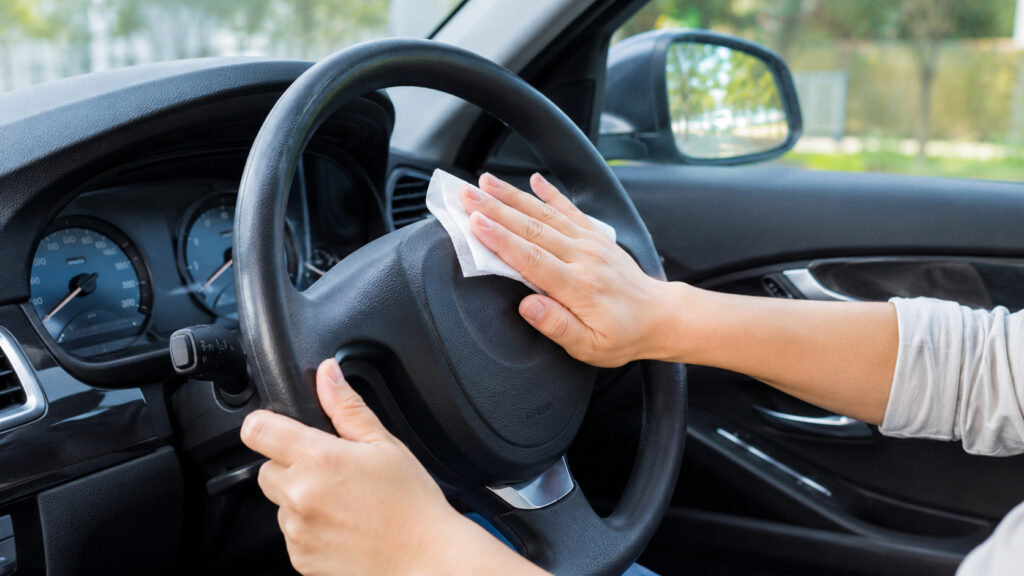
Hand hygiene and workspace care support each other. Wiping down high-touch personal items according to their manufacturer’s instructions, avoiding clutter around food, and keeping a reusable water bottle clean are small habits that make a desk easier to maintain.
There is no need to overdo it. A quick reset at the end of the day is often enough: put away shared items, dispose of used tissues, wipe an appropriate surface if needed, and leave the desk ready for tomorrow.
This approach is more sustainable than occasional bursts of deep cleaning because it turns care into a normal part of finishing work.
A Culture Built on Small Choices
Healthy workplace habits are easier to follow when they feel considerate rather than performative. Refilling a sanitizer station, returning a shared headset to its place, or cleaning your hands before a team lunch is a small way to look after the people around you.
Managers and team members do not need to turn hygiene into a lecture. Clear access to supplies, sensible reminders, and a routine that respects everyone’s time are usually enough.
In a shared workspace, the most effective habits are often the least dramatic. Clean hands at the right moments. A tidy personal area. A little consideration for the next person who uses the same space.
Those small choices can make everyday work feel more comfortable, more prepared, and more thoughtful for everyone.
Think about how many times you touch your smartphone in a single day.
You pick it up when you wake up. You take it to work. You use it on public transport, in cafés, at the airport, at the gym, while shopping, and sometimes even in the bathroom. Then you put it on a desk, a restaurant table, a car seat, or a kitchen counter before picking it up again.
Unlike many other objects we use throughout the day, smartphones rarely get the same cleaning attention as our hands.
And that creates an interesting hygiene problem.
Your phone is constantly moving between your hands and the environment around you. Every time you touch a shared surface and then reach for your phone, some of the microorganisms on your hands can potentially make their way onto the device. Later, when you pick up the phone again, the process can happen in reverse.
Researchers studying mobile phones have repeatedly found bacterial contamination on their surfaces. The exact microorganisms and level of contamination vary considerably depending on the environment and the person using the device, so dramatic claims that every phone is somehow “dirtier than a toilet” are not particularly useful. What the research does show is simpler: phones can act as surfaces that collect and transfer microorganisms.
That makes your phone worth thinking about as part of everyday hygiene.
The Hand–Phone–Hand Cycle
The problem is not that your smartphone is inherently dangerous.
The problem is how we use it.
Imagine a normal morning commute.
You open the door to your apartment building, press an elevator button, hold a handrail on the subway, use a payment terminal at a coffee shop, and then check a message on your phone.
A few minutes later, you may wash or sanitize your hands.
Then you immediately pick up the same phone again.
This is where people often overlook an important part of hygiene. Cleaning your hands is helpful, but regularly handling an object that moves between different environments can reintroduce microorganisms to your hands.
Researchers have found bacteria both on people’s hands and on their mobile phones, supporting the idea that phones can participate in this cycle of cross-contamination.
It does not mean that touching your phone will automatically make you sick. Exposure does not equal infection. But it does demonstrate why hand hygiene works best as a routine rather than a one-time action.
Why Smartphones Collect So Much
Smartphones have several characteristics that make them particularly good at collecting whatever happens to be on our hands.
First, we touch them constantly.
Second, we carry them into many different environments.
Third, phones spend a lot of time close to our face.
And finally, many people clean their phones far less frequently than objects such as kitchen counters, bathroom surfaces, or even computer desks.
The result is a device that continuously travels between different environments while receiving plenty of direct contact from our hands.
Research in both community and healthcare settings has identified a wide range of microorganisms on mobile phones. Studies involving healthcare workers have even detected antibiotic-resistant bacteria, although hospital environments obviously involve different exposure levels than normal everyday life.
The practical lesson is not to become afraid of your phone.
It is simply to include it in your hygiene routine.
Think About Where You Put Your Phone
Many of us are careful about where we put food but surprisingly relaxed about where we put our phones.
Consider a typical day.
Your smartphone might spend time on:
Restaurant tables
Office desks
Gym equipment
Airport seats
Public charging stations
Car consoles
Checkout counters
Kitchen surfaces
Bathroom shelves
Hotel furniture
Then, five minutes later, the same phone might be next to your face while you’re making a call.
This constant movement is one reason smartphones deserve more attention when we think about personal hygiene.
A cleaner routine does not require disinfecting your phone every ten minutes. That would be excessive, impractical, and potentially bad for the device.
Instead, it means being more aware of when your hands and your phone have been exposed to particularly busy or dirty environments.
Hand Hygiene Is Still the Most Practical First Step
You cannot control every surface you touch throughout the day.
You can control what you do afterward.
According to the CDC, washing hands with soap and water is the best option for removing germs in most situations. When soap and water are not available, an alcohol-based hand sanitizer containing at least 60% alcohol can be used to clean the hands.
This is especially practical after situations such as:
Using public transportation
Shopping
Handling shared equipment
Visiting crowded public places
Using shared office spaces
Touching public doors or elevators
Traveling through airports or train stations
The goal is not to sanitize your hands every thirty seconds.
It is to recognize the moments when hand cleaning makes sense.
When Should You Choose Soap and Water?
Hand sanitizer is useful because it is quick, portable, and does not require access to a sink.
But it is not a complete replacement for handwashing.
Soap and water should generally be your first choice when your hands are visibly dirty or greasy. The CDC also notes that hand sanitizer does not eliminate every type of germ and may be less effective under certain conditions.
A simple rule works well:
If your hands are visibly dirty, wash them.
If you need to clean your hands and do not have access to soap and water, an appropriate hand sanitizer can be a convenient alternative.
That distinction matters because good hygiene is not about using the same product for every situation. It is about choosing the right method at the right time.
Don’t Forget to Clean the Phone Itself
Cleaning your hands while never cleaning your phone only addresses half of the routine.
Smartphones should also be cleaned periodically, particularly after heavy use in public environments.
The important part is to follow the cleaning recommendations for your specific device rather than spraying whatever cleaning product happens to be nearby directly onto the screen.
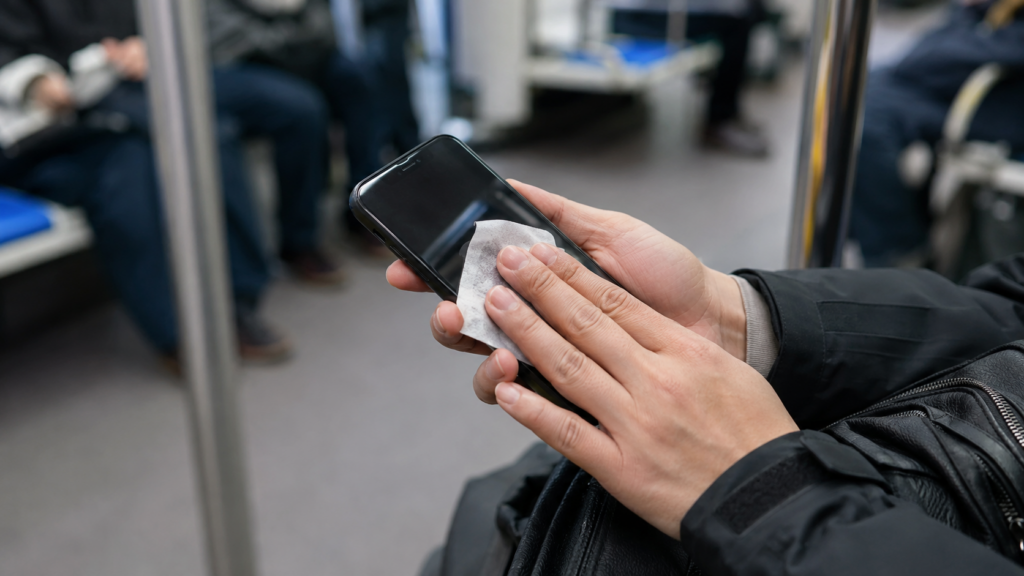
For example, Apple currently states that certain disinfecting wipes, including 70% isopropyl alcohol wipes and 75% ethyl alcohol wipes, can be gently used on exterior iPhone surfaces. Apple also warns against getting moisture into openings or submerging the device in cleaning products.
Samsung similarly recommends turning the device off, disconnecting cables, and using a soft microfiber cloth. For supported Galaxy devices, Samsung says a cloth dampened with an appropriate alcohol-based disinfectant may be used on certain exterior surfaces while avoiding excessive moisture and openings.
The exact cleaning instructions can vary by device, material, screen coating, case, and manufacturer.
So check the manufacturer’s recommendations before disinfecting your phone.
Hand Sanitizer Is for Your Hands
There is another distinction worth making.
A hand sanitizer and a surface disinfectant are not automatically interchangeable.
A product formulated for your skin should be used according to its label. You should not assume that pouring hand sanitizer onto your smartphone is the correct way to disinfect the device.
Apart from potentially damaging the phone, the manufacturer may recommend a completely different cleaning method.
Use hand sanitizer for your hands.
Clean your device according to the device manufacturer’s instructions.
It sounds obvious when written down, but human beings have managed to turn “spray random liquid onto expensive electronics” into a surprisingly persistent cleaning technique.
Your Smartphone and Food
One situation deserves particular attention: eating.
People often check their phones while waiting for food, while eating lunch, or even while preparing a meal.
That means a phone that has spent the morning traveling through public environments can suddenly appear right next to food.
A useful habit is simple:
Clean your hands before eating, and try not to repeatedly handle your phone during the meal.
If you do use your phone, particularly after it has been handled in public environments, consider cleaning your hands again before touching food.
The CDC recommends handwashing before eating and during food preparation.
Small changes like this are much easier to maintain than trying to create a perfectly sterile environment around yourself.
Smartphones at Work
Phones can also move microorganisms between personal and professional spaces.
You arrive at the office, put your phone on the desk, use a shared coffee machine, open meeting-room doors, touch a printer, pick up your phone, use someone else’s keyboard, and then answer another message.
In workplaces where many people share equipment and spaces, hand hygiene becomes particularly useful.
For most offices, this does not require complicated infection-control procedures.
Basic habits go a long way:
Keep your hands clean
Clean your phone periodically
Avoid placing your phone on obviously dirty surfaces
Avoid touching your face unnecessarily
Wash your hands before eating
Keep hand sanitizer accessible when a sink is not nearby
Simple routines are usually the ones people actually continue using.
Your Phone While Traveling
Travel makes the hand-phone cycle even more noticeable.
Airports, trains, buses, taxis, hotels, and restaurants involve constant interaction with shared surfaces. At the same time, travelers depend heavily on smartphones for boarding passes, navigation, payments, translation, tickets, and communication.
So the phone gets handled after almost every stage of the journey.
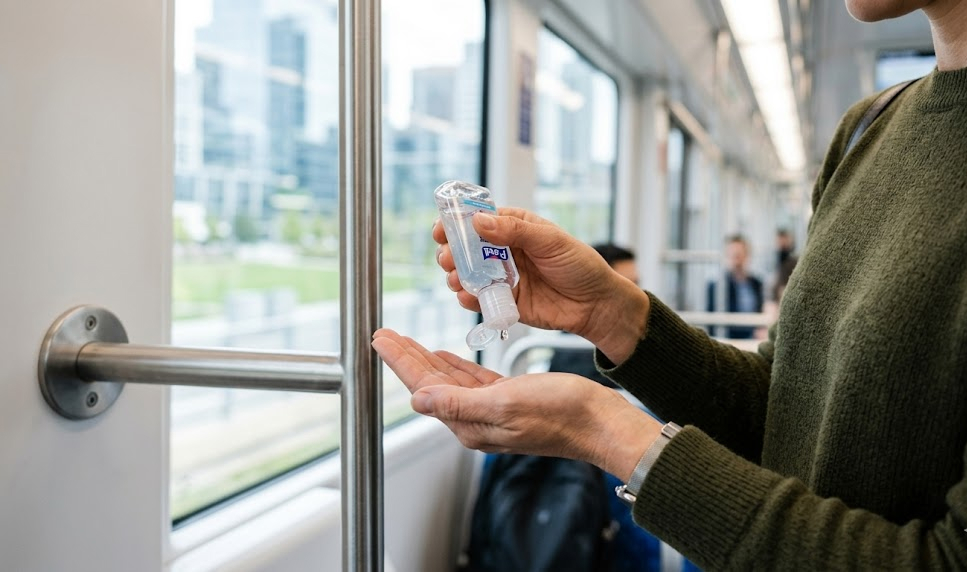
Keeping a small hand sanitizer in a backpack, handbag, car, or carry-on can make hand hygiene easier when soap and water are not immediately available.
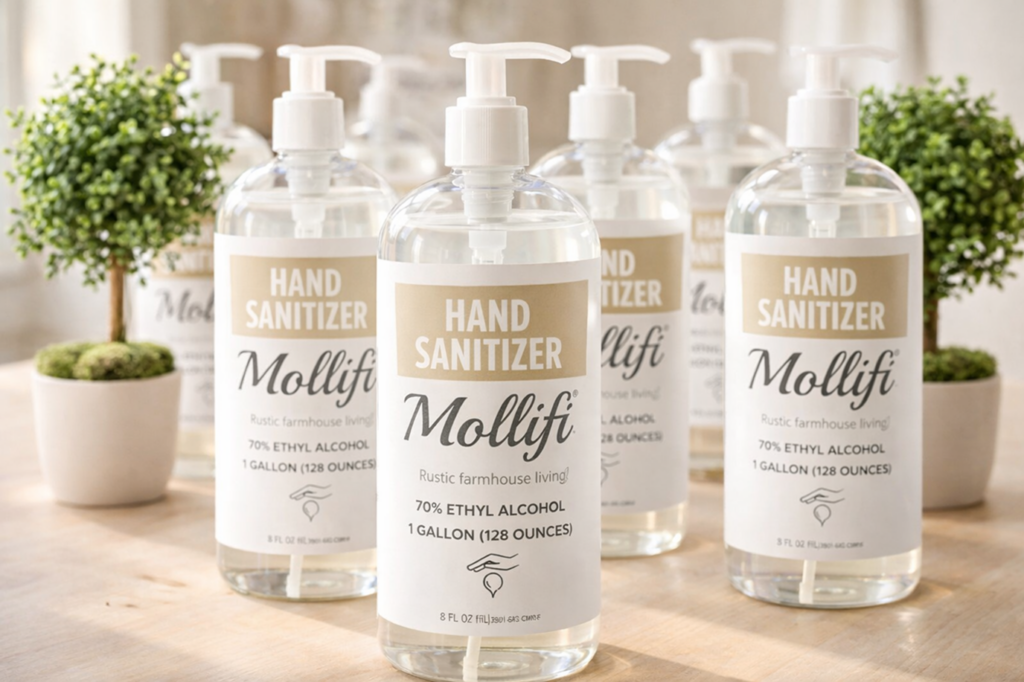
This is exactly where products such as Mollifii Sanitizers fit naturally into a daily routine.
They are not about creating a sterile bubble around yourself. That is neither realistic nor necessary.
They are about making hand hygiene more convenient when life puts you somewhere without a sink.
Where Mollifii Fits Into Your Daily Routine
The easiest hygiene habits are the ones that require almost no extra effort.
A sanitizer that stays in your bag, vehicle, desk, or travel kit is available when you actually need it.
Mollifii Sanitizers are designed to support this kind of everyday routine: after public transport, while traveling, after shopping, at work, or during other situations when washing your hands immediately is not practical.
Use the product according to its label and remember that hand sanitizing should complement regular handwashing rather than replace it entirely.
The objective is straightforward: cleaner hands at the moments when it matters.
A Simple Smartphone Hygiene Routine
You do not need an elaborate cleaning schedule.
Try something more realistic:
Wash your hands regularly with soap and water.
When soap and water are unavailable, use an appropriate hand sanitizer according to its label.
Clean your smartphone periodically following the manufacturer’s instructions.
Pay extra attention after using public transportation, gyms, airports, stores, or other heavily shared spaces.
Avoid placing your phone on obviously dirty surfaces.
Clean your hands before eating or preparing food.
Remember that cleaning your hands and cleaning your phone are two separate parts of the same hygiene routine.
These small habits take very little time, but they help interrupt the constant movement of microorganisms between your hands, your phone, and your surroundings.
Final Thoughts
Your smartphone is probably one of the most frequently touched objects you own.
That alone makes it worth including in your everyday hygiene habits.
There is no reason to become obsessed with making your phone perfectly germ-free. Our environment is full of microorganisms, and most of them are not a threat.
The smarter approach is simply to reduce unnecessary transfer.
Wash your hands when you can. Use hand sanitizer when soap and water are not available. Clean your phone appropriately. Pay attention to what you touch before eating or touching your face.
Your phone will continue to follow you everywhere.
Your hygiene routine probably should too.
Mollifii Sanitizers make that routine easier to carry with you, helping you keep clean hands within reach throughout the day.
Hantavirus is one of those words that tends to sound alarming the moment it appears in the news. Unlike seasonal colds or flu, it is not something most people encounter regularly. Still, hantavirus infections can be serious, which makes it worth understanding how the virus spreads and what practical steps actually reduce the risk.
The most important thing to know is that hantavirus prevention is not mainly about avoiding crowds or constantly sanitizing every object around you. Most infections are connected to rodents and the materials they leave behind, including urine, droppings, saliva, and nesting material.
Good hand hygiene matters, but it is only one part of a broader prevention routine.
What Is Hantavirus?
Hantaviruses are a group of viruses carried primarily by rodents. Different types of hantaviruses are found in different parts of the world and may cause different forms of illness.
In North, Central, and South America, certain hantaviruses can cause hantavirus pulmonary or cardiopulmonary syndrome. This is a serious condition that primarily affects the lungs and cardiovascular system.
In Europe and Asia, hantaviruses are more commonly associated with hemorrhagic fever with renal syndrome, which can affect the kidneys and blood vessels.
Most people will never develop a hantavirus infection. However, when infection does occur, the illness may progress quickly and require urgent medical care. There is currently no specific treatment that cures hantavirus infection, so prevention and early medical attention remain especially important.
How Do People Become Infected?
Hantavirus is mainly spread from infected rodents to humans.
Rodents can release the virus through their urine, droppings, and saliva. When these materials dry, small contaminated particles may become mixed with dust. Sweeping, vacuuming, or disturbing the area can send those particles into the air, where they may be inhaled.
This means a person may be at risk while cleaning:
• A garage that has been closed for months • A basement with signs of mice • A shed, barn, or storage building • A cabin that has been empty during winter • A vehicle where rodents have built a nest • Boxes or stored items contaminated by rodent waste
Infection may also occur if contaminated material reaches the eyes, nose, mouth, or damaged skin. Rodent bites and contaminated food are less common but possible routes of exposure.
For most hantaviruses, ordinary person-to-person transmission is not considered the main risk. Andes virus, found primarily in parts of South America, is an important exception. Limited transmission between people has been documented, usually after close and prolonged contact.
Why Everyday Hygiene Still Matters
Because hantavirus is strongly connected to rodent exposure, hand hygiene alone cannot provide complete protection. Still, clean hands help reduce the chance that contaminated material will be transferred from a surface to the face, food, personal belongings, or other people.
Think about what happens during a typical cleanup. You may move boxes, open doors, handle tools, touch garbage bags, adjust your clothing, or reach for your phone. Without thinking, you may then touch your nose, eyes, or mouth.
Good hygiene creates a useful barrier between contact with a potentially contaminated environment and the rest of your daily routine.
The most reliable option after cleaning is to wash your hands thoroughly with soap and warm water. When soap and water are not available, a waterless alcohol-based hand sanitizer may support routine hand hygiene, provided the hands are not visibly dirty or covered with organic material.
Where Hand Sanitizer Fits Into Hantavirus Prevention
Hand sanitizer is useful, but its role should be described accurately.
It can help clean hands after ordinary contact with shared objects, tools, door handles, storage containers, and other surfaces. It can also be useful while camping, working outdoors, traveling, or visiting places where immediate access to a sink is limited.
However, hand sanitizer should not be treated as the primary method of preventing hantavirus infection.
It does not replace:
• Rubber or plastic gloves • Proper ventilation • Safe removal of rodent waste • An appropriate surface disinfectant • Sealing holes and controlling rodents • Washing visibly dirty hands with soap and water
Sanitizer should never be poured or sprayed directly onto rodent droppings as a substitute for a proper household disinfectant. Products intended for skin and products designed for disinfecting contaminated surfaces have different purposes.
A sanitizer is part of personal hygiene. A surface disinfectant is part of environmental cleaning. Mixing up those roles creates unnecessary risk.
How to Clean Rodent Droppings Safely
One of the biggest mistakes people make is reaching for a broom or vacuum cleaner as soon as they see droppings.
That may feel like the fastest solution, but it can disturb contaminated dust and send tiny particles into the air. Dry sweeping and vacuuming should be avoided until the affected material has been properly soaked and disinfected.
A safer process includes the following steps:
1. Ventilate the space
If you are entering a closed cabin, garage, shed, basement, or other enclosed area, open the doors and windows and allow fresh air to circulate before cleaning. Leave the area while it ventilates.
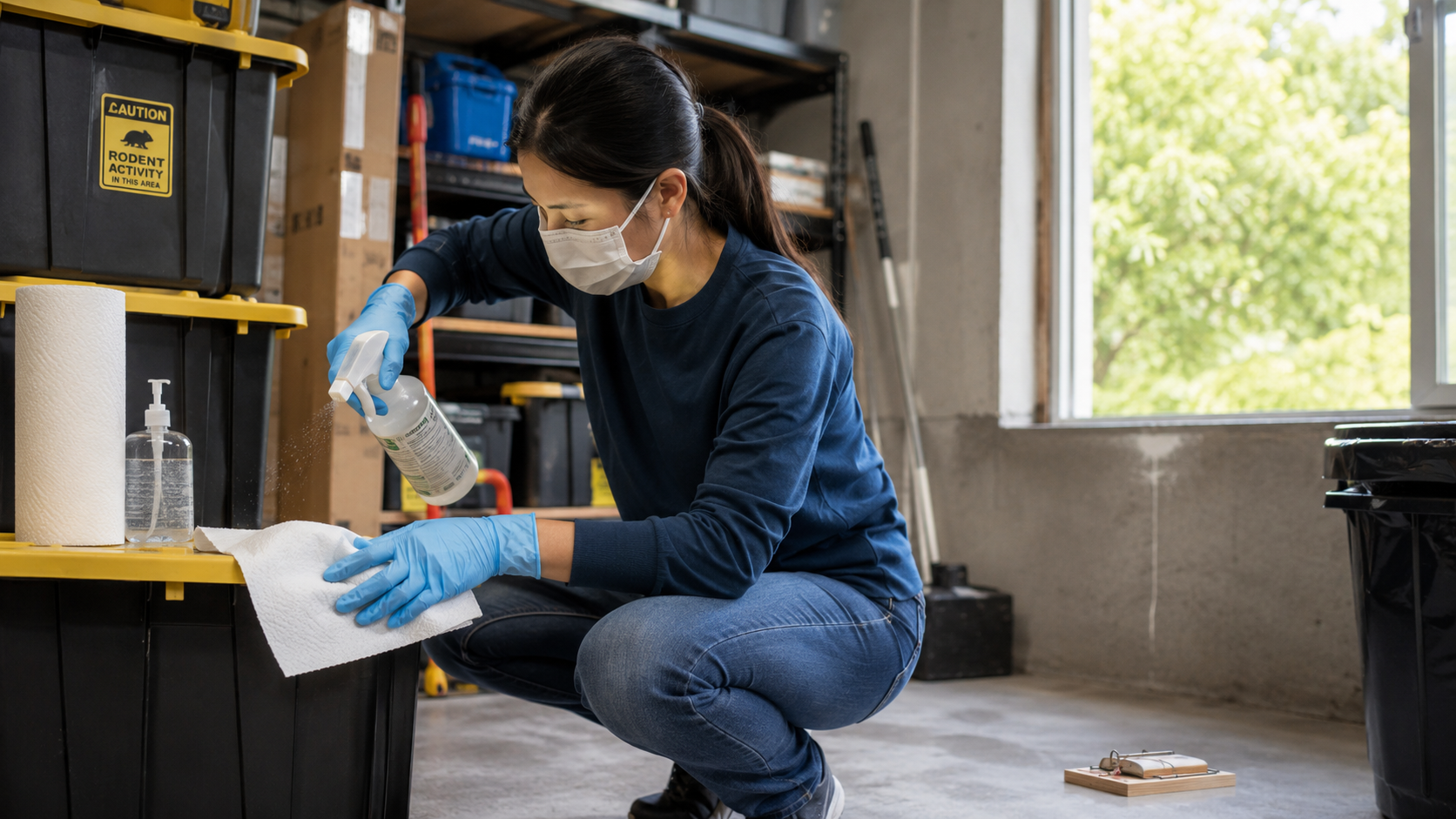
2. Put on protective gloves
Wear rubber or plastic gloves before touching contaminated objects, droppings, nesting materials, traps, or dead rodents.
3. Wet the contaminated material
Spray the droppings, urine, nest, or surrounding surface with an appropriate household disinfectant or a correctly prepared bleach solution. The area should be thoroughly wet rather than lightly misted.
4. Allow the disinfectant to work
Follow the contact time stated on the product label. CDC guidance commonly recommends allowing the wet disinfectant to remain on the material for at least five minutes, unless the product instructions specify a different time.
5. Wipe up the material
Use paper towels or disposable materials to remove the wet waste. Place everything into a covered garbage container. Dead rodents and nesting materials may require double-bagging before disposal.
6. Clean the surrounding surfaces
After removing the visible waste, mop or wipe nearby floors, shelves, counters, drawers, and other hard surfaces with disinfectant.
7. Remove gloves carefully
Wash the outside of the gloves before removing them. After removing the gloves, wash your bare hands thoroughly with soap and warm water.
When soap and water are temporarily unavailable and the hands are not visibly soiled, an alcohol-based hand rub may be used until proper handwashing is possible.
Common Hygiene Mistakes
Hantavirus prevention is less about complicated medical equipment and more about avoiding a few dangerous shortcuts.
Sweeping dry droppings
This can send potentially contaminated particles into the air. Wet and disinfect the material first.
Using a regular vacuum cleaner
Vacuuming untreated rodent waste may spread contaminated dust through the room and the vacuum exhaust.
Cleaning without gloves
Bare-hand contact increases the possibility of transferring contaminated material to the face, phone, food, or personal items.
Touching your face during cleanup
People often adjust glasses, scratch their nose, or touch their mouth without noticing. Try to keep your hands away from your face until the cleanup is finished and your hands have been washed.
Using hand sanitizer instead of surface disinfectant
A skin sanitizer is not automatically suitable for disinfecting floors, droppings, nests, or contaminated household materials. Always use a product labeled for the surface and purpose involved.
Ignoring the source of the problem
Cleaning the droppings without sealing entry points means the rodents may return. Prevention requires removing food sources, closing holes and gaps, and controlling the infestation.
Reducing Rodent Activity Around Your Home
The most effective prevention strategy is to reduce contact with rodents in the first place.
Inspect the exterior of your home, garage, basement, and storage areas for openings. Mice can enter through surprisingly small gaps, so damaged vents, spaces around pipes, gaps beneath doors, and cracks in walls should be repaired.
Food should be stored in sealed containers. Pet food, birdseed, and garbage can also attract rodents and should not be left accessible overnight.
Remove unnecessary clutter from garages, sheds, and basements. Cardboard boxes, paper, fabric, and rarely moved objects can provide nesting material and hiding places.
If you notice repeated signs of rodents, a large amount of waste, nests inside ventilation systems, or contamination throughout an entire building, professional pest-control and cleanup services may be safer than handling the situation yourself.
Outdoor Activities and Hantavirus Awareness
Hantavirus prevention also matters outside the home.
Campers, hikers, agricultural workers, forestry workers, and people staying in seasonal cabins may encounter rodent-contaminated environments. Before sleeping in a cabin or shelter, check for droppings, nests, gnawed packaging, and other signs of rodent activity.
Keep food sealed and avoid leaving open food inside tents, vehicles, or sleeping areas. Do not handle wild rodents, even if they appear dead.
Carry gloves, appropriate cleaning supplies, soap, clean water, and hand sanitizer. Mollifii Sanitizers can be kept in a backpack, vehicle, garage, or travel bag to support everyday hand hygiene when a sink is not immediately available.
Use every product according to its label. A sanitizer can help maintain cleaner hands during daily activities, but it should be used alongside proper cleaning procedures rather than as a replacement for them.
When Symptoms Require Medical Attention
The early symptoms of hantavirus infection may resemble flu or another common viral illness. They can include fever, headache, muscle aches, fatigue, nausea, vomiting, or abdominal discomfort.
Depending on the type of hantavirus, the illness may later progress to breathing difficulties, coughing, low blood pressure, bleeding problems, or impaired kidney function.
Anyone who develops these symptoms after possible contact with rodents, rodent waste, or a heavily contaminated building should seek medical attention promptly. It is important to tell the healthcare provider about the possible rodent exposure, even if it occurred several weeks earlier.
That detail can help doctors decide whether hantavirus testing should be considered.
What Really Helps?
Hantavirus prevention does not depend on a single product or habit.
What really helps is a combination of practical measures:
• Keeping rodents out of homes and workplaces • Storing food securely • Ventilating closed spaces before cleaning • Never sweeping or vacuuming dry rodent waste • Using gloves and an appropriate surface disinfectant • Washing hands thoroughly after cleanup • Using hand sanitizer when soap and water are unavailable • Avoiding contact between dirty hands and the face • Seeking medical care after symptoms and possible rodent exposure
Everyday hygiene is important because it supports these larger protective steps. It reduces careless transfer from contaminated objects to the hands, face, food, and personal belongings.
Mollifii Sanitizers can be a convenient part of that routine. Keep a bottle available for travel, outdoor work, garages, vehicles, and other situations where immediate handwashing may not be possible. Just remember that responsible protection begins with understanding the actual risk and using the right method for each task.
Final Thoughts
Hantavirus is serious, but fear is not a useful prevention strategy. Clear information is.
The main risk comes from exposure to infected rodents and their waste, especially when contaminated material is disturbed in an enclosed space. Safe cleaning, rodent control, ventilation, protective gloves, surface disinfection, and proper handwashing offer far more protection than simply spraying sanitizer after the fact.
Hand sanitizer still has a valuable role. It helps support cleaner hands during ordinary activities and provides a practical option when soap and water are not immediately available.
The best approach is simple: control the source, clean safely, protect your hands, and use each hygiene product for the job it was designed to do.
Sources Used for Fact-Checking
World Health Organization: https://www.who.int/news-room/fact-sheets/detail/hantavirus
Centers for Disease Control and Prevention: https://www.cdc.gov/hantavirus/about/index.html https://www.cdc.gov/hantavirus/prevention/index.html https://www.cdc.gov/healthy-pets/rodent-control/clean-up.html
Travel has become an essential part of modern life. Whether it is a daily commute, a business trip, a vacation, or international travel, people constantly interact with shared environments and public surfaces.
Airports, train stations, hotels, public transportation, restaurants, and tourist attractions expose travelers to countless germs every day. Because of this, maintaining proper hand hygiene while traveling is one of the simplest and most effective ways to support personal health and reduce unnecessary exposure to bacteria and viruses.
Why Travel Increases Exposure to Germs
Travel naturally places people in crowded environments with high levels of physical contact.
During a typical trip, travelers may touch:
airport security trays
luggage handles
boarding passes
elevator buttons
hotel door handles
payment terminals
public transport rails
shared restroom surfaces
Many of these objects are touched by hundreds or even thousands of people every day.
This constant exposure creates more opportunities for bacteria and viruses to spread through hand contact.
Airports and Public Transport
Airports and transportation systems are among the busiest public spaces in the world.
Passengers spend hours moving through terminals, sitting in waiting areas, using escalators, touching kiosks, and handling personal belongings after contact with shared surfaces.
Similarly, buses, trains, taxis, and airplanes involve close interaction with public spaces where maintaining hygiene may be difficult.
While cleaning systems in transportation hubs continue to improve, personal hygiene habits remain extremely important.
The Importance of Hand Hygiene While Traveling
Good hand hygiene helps reduce the transfer of germs from surfaces to the face, mouth, nose, and eyes.
This becomes especially important during travel because people often:
eat on the go
touch their phones frequently
interact with crowded spaces
spend long periods away from handwashing facilities
Keeping hands clean throughout the day supports healthier travel habits and improves overall hygiene awareness.
Why Hand Sanitizers Are Essential for Travelers
Hand sanitizers provide a fast and practical solution when soap and water are not immediately available.
Travelers often cannot access sinks quickly during:
flights
train rides
road trips
shopping stops
outdoor activities
long commutes
This makes portable sanitizers an important everyday travel essential.
A quality sanitizer can be used within seconds and easily carried in:
backpacks
handbags
pockets
luggage
car compartments
Modern formulas are designed for quick drying and comfortable repeated use throughout the day.
Travel and Emerging Viruses
Recent years have shown how quickly viruses can spread across countries through global travel.
COVID-19 demonstrated the importance of prevention and personal hygiene in crowded environments. Even as newer variants continue to evolve, many people remain more aware of hygiene than ever before.
While no sanitizer can completely prevent illness, regular hand cleaning helps reduce exposure to harmful germs and supports safer travel routines.
Prevention is often built on small consistent habits.
Protecting Yourself During Daily Commutes
Travel hygiene is not only important for international trips.
Daily commuting also exposes people to shared public surfaces every day.
Office workers, students, delivery drivers, and commuters regularly touch:
subway rails
bus handles
office equipment
shared elevators
public doors
Using hand sanitizer during daily travel can help support cleaner habits and reduce unnecessary contact with germs.
How Mollifii Sanitizers Support Everyday Travel
Mollifii Sanitizers are designed for convenient daily use wherever life takes you.
Compact, fast-drying, and easy to carry, Mollifii products help support everyday hygiene during:
travel
commuting
shopping
work
outdoor activities
public transportation use
Using Mollifii sanitizers after touching shared surfaces helps keep your hands cleaner and adds an extra layer of hygiene protection throughout the day.
Small habits can make a meaningful difference in modern public environments.
Simple Hygiene Tips for Travelers
To maintain better hygiene while traveling:
use sanitizer after touching shared surfaces
wash hands regularly whenever possible
avoid touching your face frequently
keep personal devices clean
carry a portable sanitizer with you
maintain clean travel accessories
These simple actions help support healthier daily routines while traveling.
Conclusion
Travel exposes people to countless shared surfaces and crowded public environments every day.
Because of this, proper hand hygiene remains one of the easiest and most practical ways to support personal wellness and reduce exposure to germs.
Mollifii Sanitizers help make hygiene simple, portable, and convenient, allowing travelers to feel cleaner and more confident wherever they go.
Even in 2026, COVID-19 remains a relevant global health concern. The virus continues to evolve, and new variants regularly appear as part of its natural mutation process. Recent strains such as NB.1.8.1, XFG, and BA.3.2 are being monitored by international health organizations because they spread efficiently and may partially bypass existing immunity.
Although newer variants are not always more severe, their ability to circulate quickly means personal hygiene still plays an important role in daily protection.
Why New Variants Still Matter
Viruses mutate every time they reproduce. Some mutations change very little, while others may improve the virus’s ability to spread from person to person.
This is why the emergence of new COVID variants remains important. Even if symptoms are similar to previous strains, higher transmissibility can still lead to more infections in communities, workplaces, schools, and public spaces.
In simple terms, a virus does not need to become “deadlier” to remain dangerous. Faster spread alone increases overall risk.
How Infection Can Spread in Daily Life
Every day we come into contact with surfaces touched by dozens or even hundreds of people.
Examples include:
payment terminals
smartphones
elevator buttons
office desks
shopping carts
public transport handrails
door handles
After touching contaminated surfaces, many people unconsciously touch their face, nose, mouth, or eyes. This is one of the reasons hand hygiene remains a critical daily habit.
While respiratory viruses primarily spread through the air, keeping hands clean still helps reduce the transfer of germs and supports broader hygiene protection.
Why Hand Sanitizers Are Important
Hand sanitizers offer a fast and convenient way to clean hands when soap and water are not available.
This is especially useful:
after touching shared surfaces
while traveling
in stores
at work
after using public transport
in schools and offices
Modern alcohol-based sanitizers work quickly and dry within seconds, making them easy to use multiple times throughout the day.
An Extra Layer of Protection with Mollifii
Mollifii Sanitizers are designed to support everyday hygiene in modern life.
Using Mollifii sanitizers and antiseptics after contact with public surfaces can help keep your hands cleaner and may slightly reduce exposure to germs and viral particles, including those associated with newer coronavirus variants.
While no sanitizer can guarantee complete protection from COVID-19 or other viruses, regular use provides an additional layer of defense as part of a responsible hygiene routine.
Small daily actions often make the biggest difference.
Why Prevention Still Matters
Protection today is about layers.
A safer daily routine includes:
keeping hands clean
using sanitizers regularly
avoiding touching your face
maintaining clean personal items such as phones
staying home when feeling unwell
These habits help lower everyday risks not only from COVID variants, but also from seasonal flu and other viruses.
Conclusion
New COVID variants continue to emerge, and the world continues to adapt.
The best response is not panic, but practical prevention.
Mollifii helps make daily hygiene simple, convenient, and effective, helping you create a cleaner and safer lifestyle for yourself and those around you.
In today’s world, personal hygiene has become more important than ever. With the emergence of new viruses and evolving strains of illnesses such as COVID-19, simple daily habits can play a major role in protecting our health. One of the most effective and accessible tools for maintaining hygiene is the use of hand sanitizers.
Why Hygiene Matters More Today
We interact with countless surfaces every day — smartphones, door handles, shopping carts, and public transport. These surfaces can carry bacteria and viruses that spread through contact. As new viral strains continue to appear, maintaining proper hand hygiene is a key step in reducing the risk of infection.
The Role of Hand Sanitizers
Hand sanitizers are designed to eliminate most common bacteria and viruses within seconds. They are especially useful when soap and water are not available. Alcohol-based sanitizers, in particular, are widely recommended for their effectiveness against many types of germs, including certain viruses.
Convenience and Everyday Use
One of the main advantages of hand sanitizers is convenience. Compact and easy to carry, they can be used anytime — at work, while traveling, in stores, or after contact with shared surfaces. This makes them an essential part of a modern lifestyle.
Protection Against Emerging Viruses
As new viruses and variants continue to develop, preventive measures become increasingly important. While no single solution guarantees complete protection, regular use of hand sanitizers significantly reduces the spread of harmful microorganisms. Combined with other hygiene practices, it helps create an additional layer of safety.
Skin Care and Modern Formulas
Modern sanitizers are designed not only for effectiveness but also for comfort. Many formulas include moisturizing ingredients that help prevent dryness, allowing for frequent use without damaging the skin.
Best Practices for Use
To get the most out of hand sanitizers, it is important to use them correctly:
Apply a sufficient amount to cover all surfaces of the hands
Rub hands together until completely dry
Use after touching public surfaces or before eating
Combine with regular handwashing whenever possible
Conclusion
In a world where health risks can change rapidly, small habits make a big difference. Hand sanitizers offer a simple, fast, and effective way to maintain hygiene and reduce the spread of germs. Incorporating them into your daily routine is a practical step toward a cleaner and safer lifestyle.